CfP: Anubis in Contemporary Popular Culture
Submissions are invited for an online symposium examining the god Anubis in contemporary popular culture, organised by Jennifer Cromwell and Arnaud Quertinmont
Recent years have seen increased focus on the reception of ancient gods in contemporary popular culture, including ‘The Gods of Antiquity in Contemporary Popular Culture’ online seminar (June 2023), panels at the annual Antiquity in Media Studies (AIMS) conference, and Alexander Vanderwalle’s forthcoming Characters and Characterization in Mythological Video Games (Bloomsbury 2026). Following from this work, the symposium ‘Anubis in Contemporary Popular Culture’ aims to examine the reception of ancient Egyptian gods through the case study of the canine deity Anubis. By adopting a focussed examination of an individual god, the symposium aims to explore the different ways that gods are adopted and adapted in diverse media and by different communities.
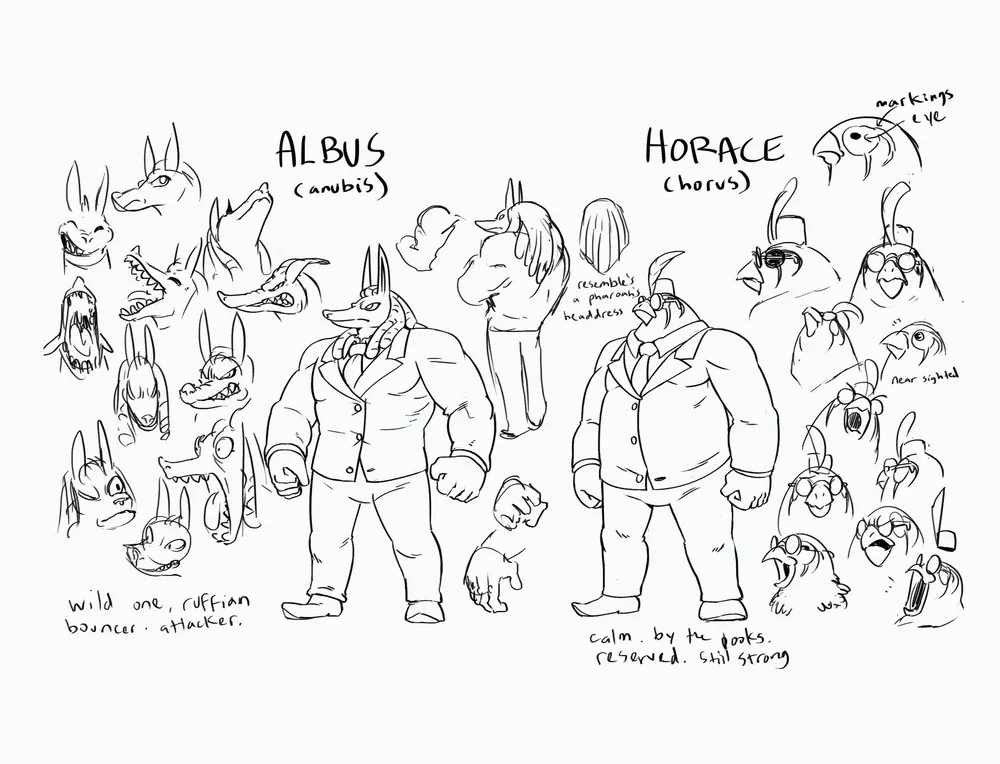
Concept art of Albus, inspired by Anubis, in Skullgirls 2nd Encore (from Skullgirls Wiki)
Proposed submissions are invited on topics such as:
· Anubis across contemporary media, e.g., comics and graphic novels; street art and graffiti; video and board games; literature; music videos; cinema, and television; digital creations (Instagram, TikTok, generative AI);
· Symbolic and community-based adoption of Anubis: fandoms and online communities, e.g., subcultures (goth, metal, furry, queer reinterpretations, etc.); alternative spiritualities; tattoo culture, cosplay, performance; identity-based or aesthetic uses;
· Visual and narrative genealogies: the origins, influences, and transformations that shape modern depictions of Anubis across different periods and cultural contexts.
· Reimagining ancient roles: comparison between Anubis’ attested roles in ancient Egypt and their modern reinterpretations, e.g., psychopomp, protector, judge; guardian, warrior, antagonist; figure of wisdom or threat; contemporary metaphors (liminality, death, transition).
We especially encourage contributions from outside Western Europe and North America. Specific case studies as well as broader studies are welcome.
Those interested in contributing to the symposium are asked to submit a 300-word (maximum) abstract and brief biography. Abstracts and any questions should be sent to Dr Jennifer Cromwell and Dr Arnaud Quertinmont (details below). The full projected timeline for submissions is as follows:
· Deadline for submission of abstracts: Friday 1st May 2026.
· Applicants informed of outcome: Friday 15th May 2026.
· Symposium dates are currently planned one or more days over 17th–19th July, depending on how many abstracts are accepted and where in the world speakers are located.
Our goal is also to produce an edited volume resulting from the symposium, which will be discussed at the time.
Contact: For more information, or to submit an abstract, please email both Dr Jennifer Cromwell at j.cromwell@mmu.ac.ukand Dr Arnaud Quertinmont at arnaud.quertinmont@musee-mariemont.be.