GTA 6's release as a cultural moment
Game Centre member Dan Joseph was recently interviewed by Newsweek about the significance of GTA 6’s release as a cultural moment. Here is the full version of his responses to their questions.
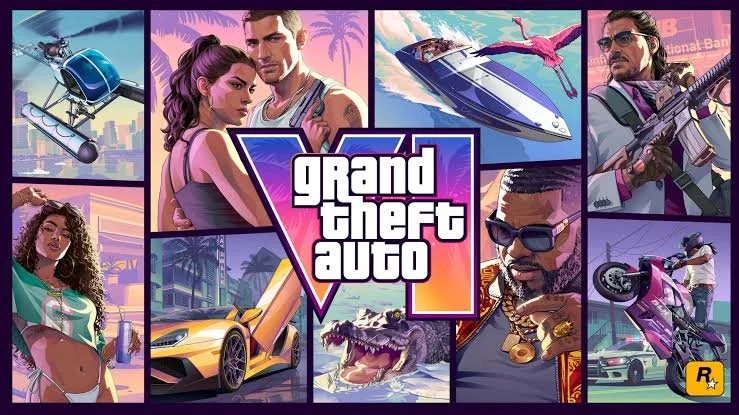
Beyond the games industry, how significant is GTA 6's release as a cultural moment?
The release is significant for a lot of reasons – obviously the video game industry wants this game to be successful for a few reasons. One is that it proves, at least to some extent, that the AAA model of spending a LOT of money (the final number is unconfirmed but could be in the area of a billion dollars) on a big game like this can result in a solid return. Because Rockstar’s games are a brand unto themselves, they also drive sales of hardware, which the platform and console owners like to see. Even though Sony has it as a launch exclusive, other platforms will get versions and that will drive hardware sales.
It also can’t be overstated that the above reasons are very important because the industry is going through a serious structural crisis at all levels – from small independent production all the way up to AAA, the old models don’t guarantee success and return on investments. There have been huge layoffs (more than 50k worldwide in the last three years) alongside massive studio closures across the world, but mostly in North America. For example, big publishers like Activision Blizzard and Electronic Arts have been bought by Microsoft or the Saudi Arabian Public Investment Fund at great expense, only to result in big shutdowns of major, storied developers like BioWare.
So there’s a confidence issue here, and that’s important. Games are a big cultural industry! In a sense, the success of GTA VI says that not everything is broken. It also might mean that some of the money made by Take-Two Interactive will circulate into the studios that choose to publish with them in the future.
But beyond the industry, I think it’s also key to note that this is likely the most expensive media object ever created. I can’t say for certain, but it’s also likely that no film or game has ever had this many people work on its development either. The marketing splash it made when the gameplay trailer was launched on Netflix was huge. There are banners across every major city where it is launching too – just last night, on my walk home through central Manchester, I saw a massive poster covering the entire side of a six-storey building.
In that sense, the brand and the marketing for a GTA combine into one of those things that doesn’t happen too much anymore in a world defined by algorithmic media fragmentation: that nearly everyone is at least aware of the launch, even if we know many people will still not play it. DJs on the indie internet radio station I listen to, NTS.live, were talking about it. That kind of event doesn’t happen anymore. It might not happen again in the future, as it seems that algorithmic fragmentation and domination are only increasing rather than going away. Punching through the way social media platforms curate content to us in hyperspecific ways takes something this big to happen.
GTA 5 came out in 2013, and America has changed enormously since then. What might GTA 6 reveal about the country today, and what role do video games now play in reflecting or commenting on society?
I live in the UK now – but I was born in the US and my parents still live there. I think things have really changed since 2013 – there have been major cultural swings in politics and popular culture. The games always reflected these in one way or another. But it’s also important to note that while all these games since GTA III have been set in the United States, they are developed primarily in Scotland with head writers and designers from the UK. They usually do some pretty big artist visits to the cities they will base GTA on – they do interviews and lots of sociological/anthropological work to capture what they perceive will be interesting to show in the game.
As such, I think what GTA VI tells us about is how the outside world perceives America. It’s made in consultation and collaboration with Americans, but it still has that outsider’s eye that, in many ways, makes it a bit more perceptive. I think GTA V was a good/fun game, but a common criticism is that it was so nihilistic or cruel. But I think in that era, even if some people remember the Obama years fondly, it was still represented in media and defined by HBO dramas about serial killers, crime kingpins, and a kind of oversaturated violence alongside smug liberalism, which was later represented by the “If Hillary Was President We’d All Be At Brunch” political demonstration signs in 2016. I think the cruelty and humour of GTA V emerged from this context.
Video games have always been complex abstractions limited in large part by technological constraints and budget. Maybe the biggest thing for people to reflect on with GTA VI is that nobody has ever spent this much money to build a facsimile of America before. In a sense, that means that it will feature representations of a breadth and depth that just haven’t been seen in one place before, with this much fidelity and detail. No particular piece seems to be groundbreaking, but taken together it’s big.
I haven’t played GTA VI yet! So I can’t speak to what it is saying about America specifically, but, like all Rockstar games, it will be A Lot. And I think we can assume that a lot of what it will say will not be too different from what we saw in Red Dead Redemption 2: an indictment of America’s dark cruelties and its hypocrisies but also its warmth and humour. At the same time, this is just one particular interpretation, one touched by a team of thousands. It will contradict itself.

GTA 6 has been picked apart over everything from politics and "wokeness" to gender and relationships. Does that mean big games should now be seen as just as culturally influential as film and TV?
I’m a sociologist of digital culture, so it’s very easy for me to say yes to this question. Video games are big business and lots of people play them around the world. There are big AAA “blockbuster” releases which look a lot like tentpole summer films. Big cultural events like a GTA release look a lot like a Taylor Swift album launch or the Super Bowl. So to answer the question again: video games have long been influential texts.
There are also thousands of serious artists the world over who take video games very seriously and make serious art with them. Just go on a platform like itch.io and you can see thousands of examples of cheap or free-to-play games that are pushing conceptual and artistic boundaries. Art and design university and college programmes produce thousands of graduates a year who want to go on to make games because they, themselves, were influenced to want to make them as creative outlets.
As for the particular kind of culture wars that video games get caught up in – it makes sense! They are a part of the cultural mix and are attached to various fandoms who can fixate on them. One thing about GTA VI getting caught up in these debates is that, because it’s so big, it is also algorithmically smart to engage with it. Everyone is talking about it, so why not join the conversation and bring your pet grievance with you. The idea that a story about a heterosexual relationship between two good-looking people who confront a complex and changing world is “woke” is very funny to me. So I think it’s more about the attention economy than the politics of the game itself (which, until reviews dropped yesterday, nobody really knew too much about) that we are seeing these conversations flourish.