Accessible Dungeons and Dragons
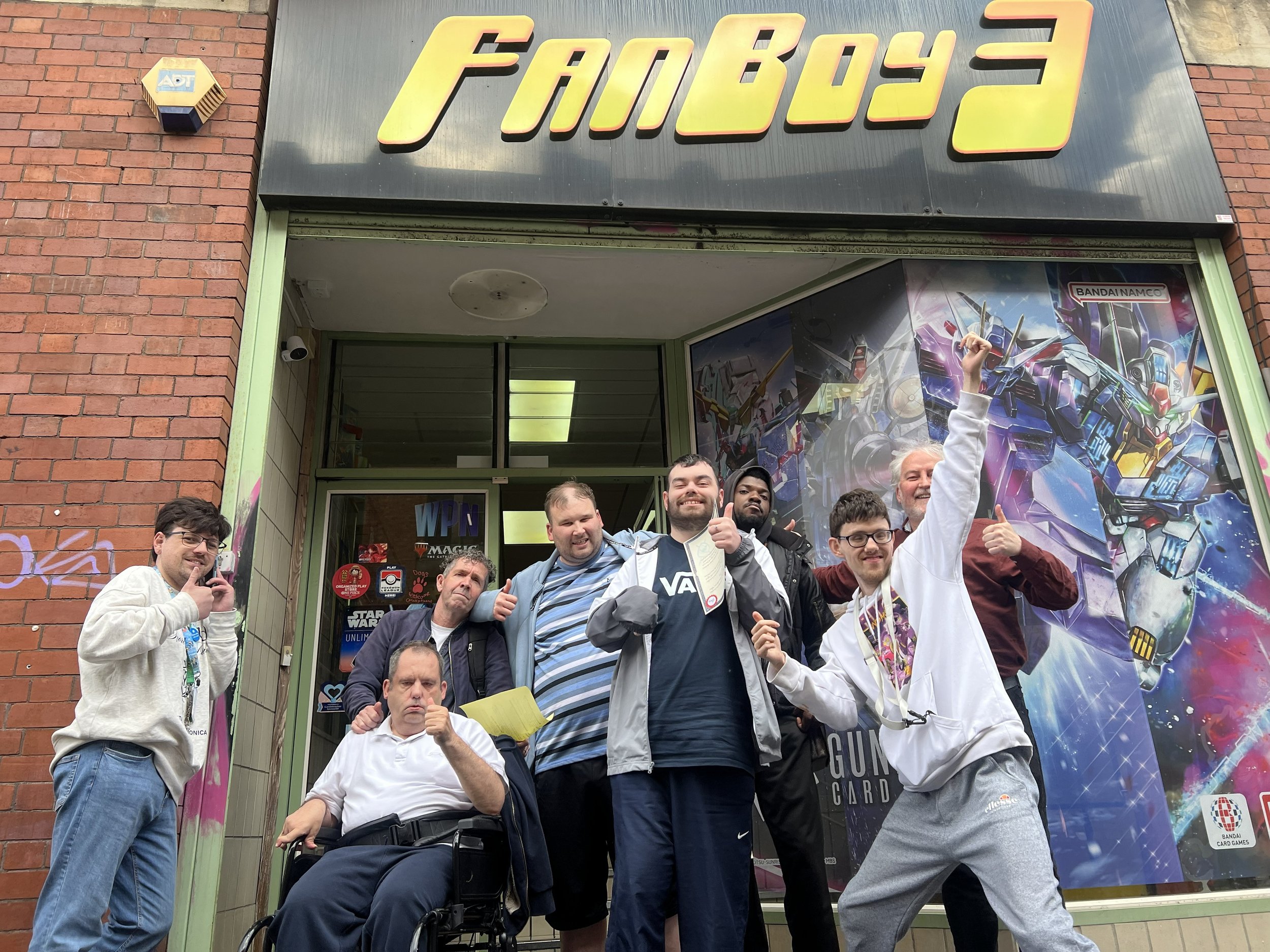
Co producing accessible Dungeons and Dragons
How can Dungeons & Dragons be adapted with adults with learning disabilities so that they can shape both the game and their experience of playing it? Dr Charlotte Hardacre is exploring this question with Manchester People First and experienced Dungeon Master Ian Hawthorne, supported by Manchester Metropolitan University’s ENGAGE Fund.
The project began with an adapted campaign, creating opportunities to explore what players enjoyed, what enabled them to participate and which aspects of the game created barriers. This provided a starting point for an ongoing process of co-production, with players’ experiences informing changes to the materials and mechanics.
What players valued
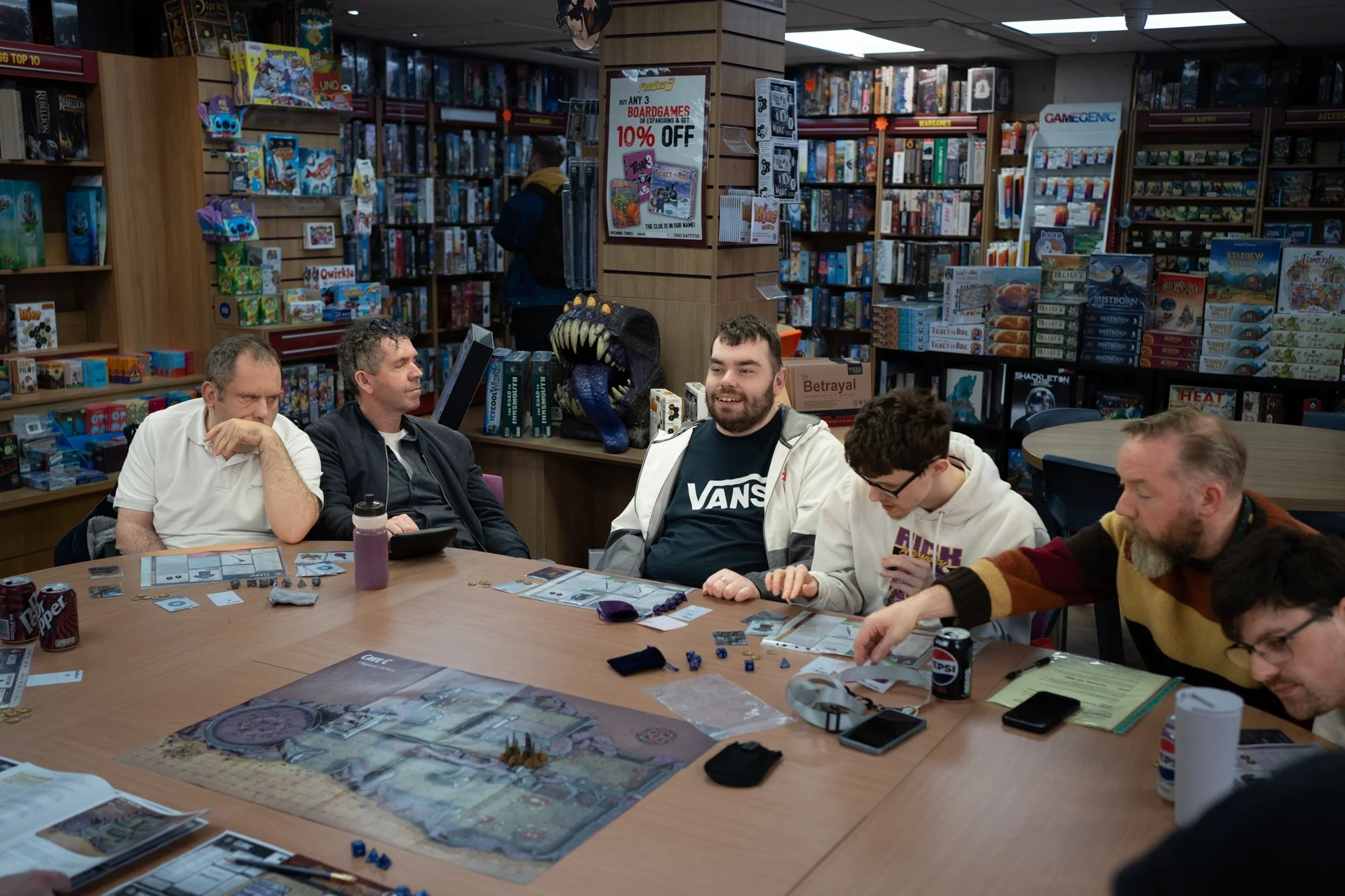
Dungeons and Dragons at Fan Boy Three.
Participants said they enjoyed being able to express themselves, have disagreements and work together. These aspects of play matter alongside the accessibility of the rules and materials: players need opportunities to contribute their own ideas, negotiate different views and influence the shared adventure. Players also highlighted their enjoyment of playing at Fan Boy Three in Manchester. Their feedback draws attention to the setting of play as part of the experience, alongside what happens within the game.
Changing the game together
After the sessions, the team developed its own simplified character sheets, working with a graphic designer and drawing on participants’ feedback. Game mechanics such as money were also removed to reduce complexity. These changes responded to what the group had learnt through playing.
The intention is to keep developing the game with participants through further play, feedback and adaptation until the group has an accessible form of D&D. Co-production is therefore an ongoing part of the work: players help determine what needs to change and how the adapted game develops.
Developing the research
The project is informing Charlotte’s developing research into tabletop role-playing as a creative method for social care evaluation. This proposed work will explore whether shared fictional scenarios can offer people with learning disabilities different ways to communicate experiences and priorities, and what would be needed to make that approach useful and accessible.
Contact Dr Charlotte Hardacre at c.hardacre@mmu.ac.uk