When Digital Worlds Hurt – and How Games Can Help
By Dr Sören Henrich & Dr Rachel Worthington
Young people today spend more time than ever in digital spaces, from social media feeds to online games. These environments can be stimulating and social. They provide fast-paced visual stimulus, a place where people can be loud and openly express their emotions through characters with people who share like-minded interests. These can be appealing to individuals who struggle to develop friendships in offline spaces, those who require high levels of mental stimulation and sensory seeking and individuals who like social engagement which is based on clearly defined rules and tasks. Whilst these may be common in many individuals, they may be factors particularly prevalent in neurodivergent individuals. Yet with these online gaming rewards come significant challenges. They are known to be places where people with more sinister motives can seek out individuals who are vulnerable to exploit them financially and sexually. They can provide exposure to harmful or shocking content which is often unmonitored; act as a pathway to harmful but persuasive social and political narratives tailored towards those who may be lonely, have mental health needs or are confused about their identity in the offline space;, and the constant stream of stimulus can make it hard to disengage from contributing to social loneliness and sleep problems. These vulnerabilities may also be particularly prevalent in neurodivergent individuals. For neurodivergent children, these risks can be intensified. They may be more prone to online harassment, compulsive gaming patterns, or emotional overload. Over time, such digital harm doesn’t just affect screen habits; it can erode self-esteem, disrupt emotional regulation, and weaken a sense of belonging. On a societal level, these pressures contribute to the fragmentation and polarisation now visible across public discourse.
As we consider these issues, an important question emerges: What kinds of environments support healthy connection rather than undermine it?

(AdobeStock_504791075)
A Different Kind of Play: Why Roleplaying Games Stand Out
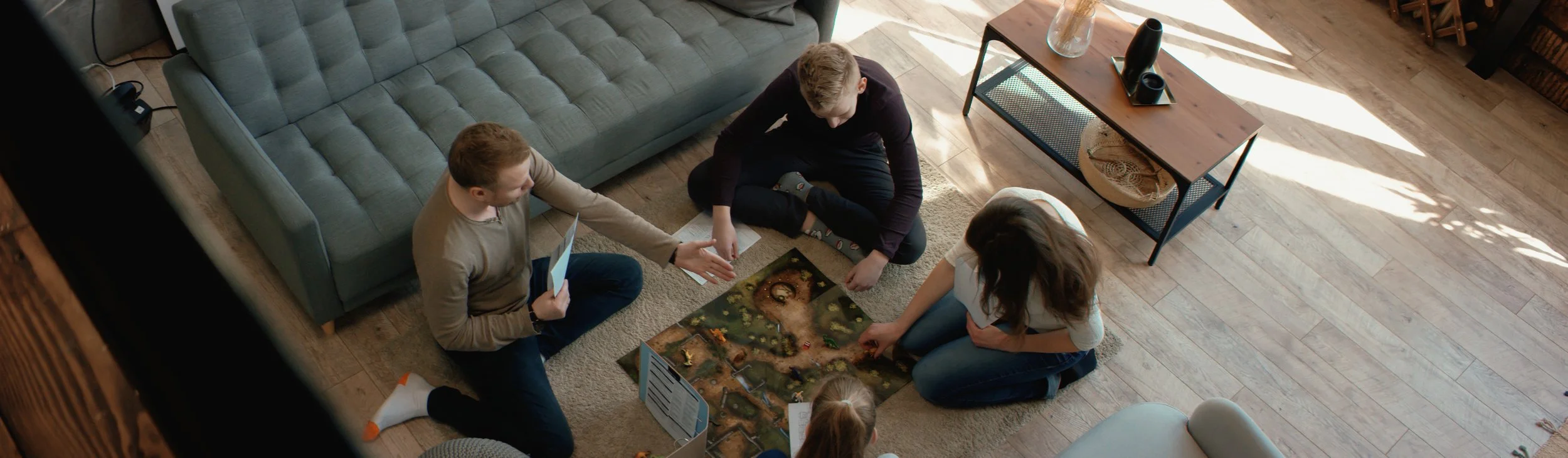
Whilst on the surface online games may seem to have many neuropsychological (or brain) rewards such as novelty, immersion, creativity and thrill, there are ways that these same rewards can also be achieved in ways that do not come with the same risks posed by online games. For example, online games are often based on competitive ranking or continuous engagement. These features can heighten anxiety, amplify isolation, and produce behaviours that resemble “misconduct” but often reflect disconnection. Tabletop roleplaying games (TTRPGs), however, offer a means through which to achieve equally rewarding neuropsychological stimulation but in a strikingly different and arguably more rewarding model. Games such as Dungeons & Dragons use slow-paced collaboration and strategic gameplay to stimulate thinking while supporting moral development, creativity, and immersive engagement. Shared storytelling provides not only social connection but empathy and self-awareness. Instead of competing against each other, players face challenges together within a structured narrative that encourages creativity and rewards individuality, fostering a group sense of identity.
Research, though still developing, increasingly suggests that TTRPGs can nurture emotional and social well-being. Players practice considering the consequences of their decisions and behaviour on others, allowing them a safe place to test this out. They can practice communication skills and turn-taking in a low-pressure setting that provides immediate feedback and opportunities for modelling of new and improved strategies and skills. For neurodivergent participants, it is possible that the clear rules and predictable rhythms of TTRPGs create a space that provides social interaction with clear functions, goals and rules which can feel safer and easier to navigate than ambiguous real-world or online interactions. With no right or wrong answers, games such as D&D may also provide a place where such individuals can feel liberated to be themselves without judgment, something which can be hard to achieve for some in other offline spaces. In contrast to online games, TTRPGs naturally embed cooperation. Collective problem-solving, shared victories, and in-story challenges cultivate a climate of teamwork rather than rivalry. It is hypothesised that this cooperative design may promote resilience, belonging, and pro-social behaviour. This balance of structure and creativity may explain why neurodiverse players are strongly represented in TTRPG communities.
Research at the Manchester Game Centre
Research into the specific positive effects of TTRPGs remains in its infancy. Despite some initial promising findings, we still lack clear explanations for the psychological mechanisms which may explain the ways in which TTRPGs improve well-being. At the Manchester Game Centre, we aim to turn these hypotheses into a strong evidence base to identify the psychological mechanisms behind the observed benefits. To do this, we compare TTRPGs with digital platforms and look at the factors which promote and inhibit well-being
Looking Ahead
Our next step is to test our hypotheses, which are not about neurodiversity and gaming per se, but rather, about how social connectedness, especially through games that facilitate this experience, could provide positive outcomes such as a sense of belonging and meaningful interaction. We predict that games that encourage teamwork, shared problem-solving, and role-based play can foster these connections, offering protective effects against isolation experiences of alienation or bullying, which may be particularly relevant for some individuals who may struggle to develop meaningful identities and social connections in other offline or online spaces. Understanding the interplay between game design and social outcomes may therefore offer a more constructive path towards healthier gaming communities that foster shared storytelling, which may help protect young people from digital harm by strengthening the connections that many online spaces inadvertently weaken.
This insight informs our ongoing work: to understand how game environments shape behaviour and to curate experiences that help all young people, neurodivergent or not, feel supported, empowered, and connected.
(AdobeStock_334454548)